


The A-Z Custom Cable Assemblies Guide:
What To Know
Specifying the right mechanical components is a critical task for any engineering or procurement team. It’s imperative that when designing and building custom wire rope assemblies, they can withstand the most demanding environments, from RV slide-out mechanisms and automotive latches to industrial actuation systems and fitness equipment.
Experienced engineers understand that a high-performing system relies on the perfect synergy between cable construction, coating selection, and hardware. At Sandin Manufacturing, we’re a trusted premier custom cable assemblies manufacturer with over 60 years of experience, providing the right technical expertise needed to help you avoid design errors, reduce maintenance cycles, and eliminate safety risks.
This A-Z Guide serves as a practical resource to help you specify your next custom cable assembly with confidence, ensuring maximum reliability and performance from the prototype stage through high-volume production.
Understanding Cable Construction
Your cable’s flexibility dictates its lifespan. If you’re routing through tight pulleys in fitness equipment, our 7×19 construction is your best bet for avoiding fatigue. But if you’re installing straight guard rails where stretch is your enemy, you’ll want to drop the core and go with the much stiffer 1×19.
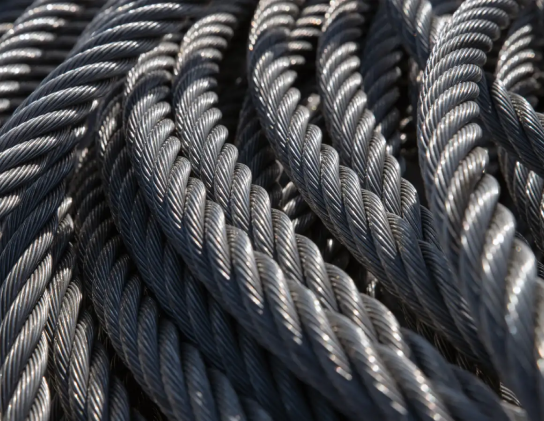
Strand Patterns and Uses
- 7×7 construction. Seven strands of seven wires each. This is recommended for applications needing a balance between flexibility and abrasion resistance, such as architectural railings and boat lift cables.
- 7×19 construction. Seven strands of 19 wires each. The most flexible standard construction, this is suggested for tight bend radii and complex routing paths in exercise equipment or trailer brake cables.
- 1×19 construction. Nineteen wires in a single strand. Because it has no separate core, it is the stiffest option with the least stretch. This can be utilized for standing rigging and guard rails where alignment is a priority.
- 6×19 and 6×36 constructions. Six strands around an independent wire rope core (IWRC). When heavy industrial hoisting and rigging where crush resistance is vital, this is the ideal construction to use.
Material Options
- Stainless steel (type 302/304). A standard corrosion-resistant alloy. It maintains its strength in temperatures from –100 °F to 800 °F.
- Stainless steel (type 316). Recommended for saltwater or pharmaceutical environments. Its molybdenum content provides superior protection against pitting.
- Galvanized steel. A cost-effective carbon steel with a zinc coating used for indoor industrial applications where the moisture is moderate.
- Bright (uncoated) carbon steel. Typically used for enclosed mechanisms where corrosion is not a factor, it offers the maximum breaking strength for its diameter.
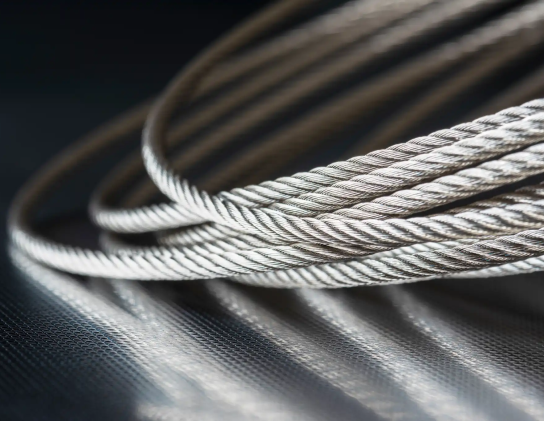
Choosing the Correct Coating
Unlike many distributors, Sandin offers several in-house extrusion capabilities. This allows us to maintain strict quality control over the coating process, ensuring the outer diameter (O.D.) and wall thickness are consistent across the entire production run.

Vinyl (PVC)
A general-purpose coating providing moisture protection and vibration dampening. Multiple durometer ratings can meet your flexibility needs and UV-resistance formulations for outdoor use.

Nylon
Known for superior abrasion resistance and a low friction coefficient. Because it is self-lubricating, it is often recommended for high-cycle applications like fitness equipment to reduce pulley wear.
Hytrel
A premium thermoplastic polyester elastomer suggested for demanding industrial environments requiring resistance to oils, chemicals, and extreme temperature fluctuations (–40 °F to 275 °F).
When our team assists you in choosing a coating, we evaluate the environment in which the cable will be used and consider the “O.D. over coating” versus the “diameter of the bare cable.” While thicker coatings can provide more protection, they may require larger pulleys or fittings. For instance, while Nylon is tough, it can absorb moisture in humid environments, which may affect dimensional stability.
End-Fittings and Hardware
Hardware is the critical interface that transfers load from the cable onto your mounting structure. Sandin’s custom cable assembly manufacturing process utilizes CNC machining and hydraulic swaging to ensure every fitting achieves 90% to 100% of the cable’s rated breaking strength.
Threaded Ends
Threaded studs and rods can range in size from #10-32 to ½”-13 UNC. These are ideal for tensioning applications where you need to adjust the cable length during installation or over the life of the product.
Eye Ends / Ball Shanks
Eye terminals create a secure loop attachment point for pins or shackles. Ball shanks, which allow for self-alignment, are essential for automotive latches and hood releases where the pull angle might vary.
Sleeves / Stops
Hydraulically swaged aluminum or copper sleeves create positive travel stops or loops. To ensure a secure bond without crushing the inner cable core – which can happen with manual crimping tools – it’s important to precisely monitor swaging pressure.
Strength, Load, and Safety
Correct sizing ensures your custom wire rope assemblies can handle applied loads with an appropriate safety margin. Undersizing a cable can lead to sudden failure, while oversizing adds unnecessary weight and cost.

Cable Sizing


Testing and Quality
Having an ISO 9001:2015 certified process ensures that every part meets your specific quality standards. At Sandin, we don’t just build assemblies; we verify their quality.
Tensile Testing
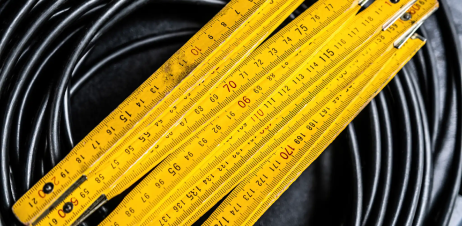
Destructive testing on production samples in a calibrated test machine is performed to confirm that the specific combination of material, core, and swaging process meets or exceeds the cable’s required breaking strength.
Proof Loading
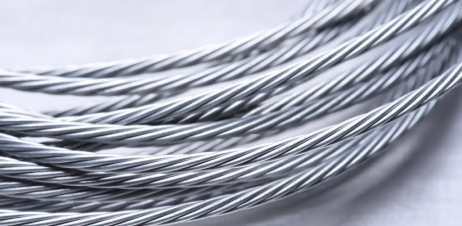
Non-destructive proof loading is performed to verify structural integrity and ensure fittings are perfectly seated before the assembly leaves our facility. At Sandin, we apply a specified load, typically 60% of the breaking strength.
Contact Sandin Manufacturing to Get Started
The difference between a reliable mechanical system and a catastrophic failure can sometimes simply be having the correct specification.
At Sandin Manufacturing, we combine our decades of engineering experience with in-house extrusion and CNC machining to deliver the highest quality custom wire rope assemblies on the market.
Whether you are a category manager looking for high-volume OEM production or a design engineer developing a specialized prototype, we are here to support your program from concept to completion. Choosing us as your custom cable assemblies manufacturer means you’ll receive a product built for strength, safety, and longevity.
If you’re ready to optimize your next project, request a quote today to speak with our engineering team about your specific requirements, material selection, or testing needs.